Another type of repository for information is the city archive. Typically, if a city has an archive, there is no employee responsible for it on a full time basis. Many times, it is a volunteer. Hours are very erratic, and advance arrangements should be made. If the archive does exist, one of the advantages is that the worker in the office usually has time to talk, and may even be anxious to talk to someone who is interested in his/her information. There is no standard set of holdings, but Riemer and Minert say that the city archives sometimes have "rare and wonderful documents".
The next government unit up from the city is the county (Kreis, Landkreis, or Stadtkreis). These usually do not hold vital records, but often have historical documents, including tax records and land transactions. There may be maps, or photographs, or a historical/cultural library. Hours are not always regular, and appointments may be hard to obtain, because the hours the office is open are irregular. Often these, and the city archives, are less formal than the church regional archives, or the civil registries, but be prepared to observe local standards.
The next larger political unit is the State (Stadt), of which there are sixteen in Germany. There is also a national archive with a main office in Koblenz, with branches in other cities. Generally, you should not expect to find vital records or church records here. You may find histories of towns, of families, or of personal histories, photographs, maps, census records, tax rolls, property transactions, and rare documents of diverse significance. These archives tend to be run in a very formal manner.
Be sure and ask about the availability of indices. Some of the larger archives are well indexed.
In all of the locations, from small to large, you may wish to ask about the availability of help to assist you. You would be "hiring" the person to work for you and to assist you. In nearly every formal office, the people there will be aware of who might be available. Such people are often retired and have some free time, so scheduling them is not critical. Such a person can tell you when to visit the parish office, tour the church, or visit the ancestral family home. Sometimes they will drive you around, but usually they prefer that you drive while they talk. Many of these people will not accept payment for their services, and may suggest instead that you make a donation to the local parish.
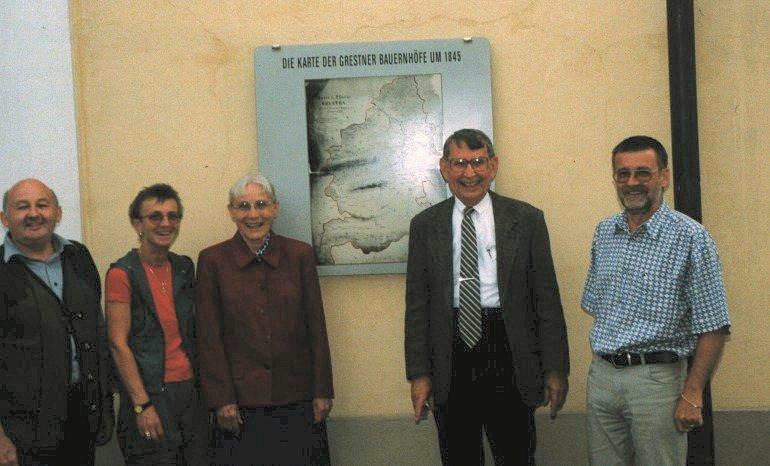
It is suggested that you be prepared for unusual experiences, such as an invitation to lunch with the pastor, or dinner with the mayor. Perhaps the local newspaper will want to run a story about the people from America who are visiting their ancestral home. (My wife and I can vouch for the great time we had in Gresten, Austria, with an assortment of locals, including the mayor. Going to the
germany-photos.html">
Germanna photo page
and then to
Gresten
, you can see the
dinner party
that we had. We hosted this as appreciation for what they had done for us. The mayor, in turn, gave us a book and a commemorative plate.)
(29 Jan 02)
We gratefully acknowledge the work of John Blankenbaker who published over 2,500 Germanna History Notes via the Germanna-L@rootsweb.com email list from 1997 to 2008. We are equally thankful to George Durman (Sgt. George) for hosting the list and republishing the notes via rootsweb.com.